

A move in winter is completely doable, but will require more planning than a summer move, as shorter days, snow, and ice all change how moving day runs.
If you are searching for a Whitby moving company, this guide covers what is worth getting sorted before the truck arrives. These winter moving tips can help for moves from November through to March.
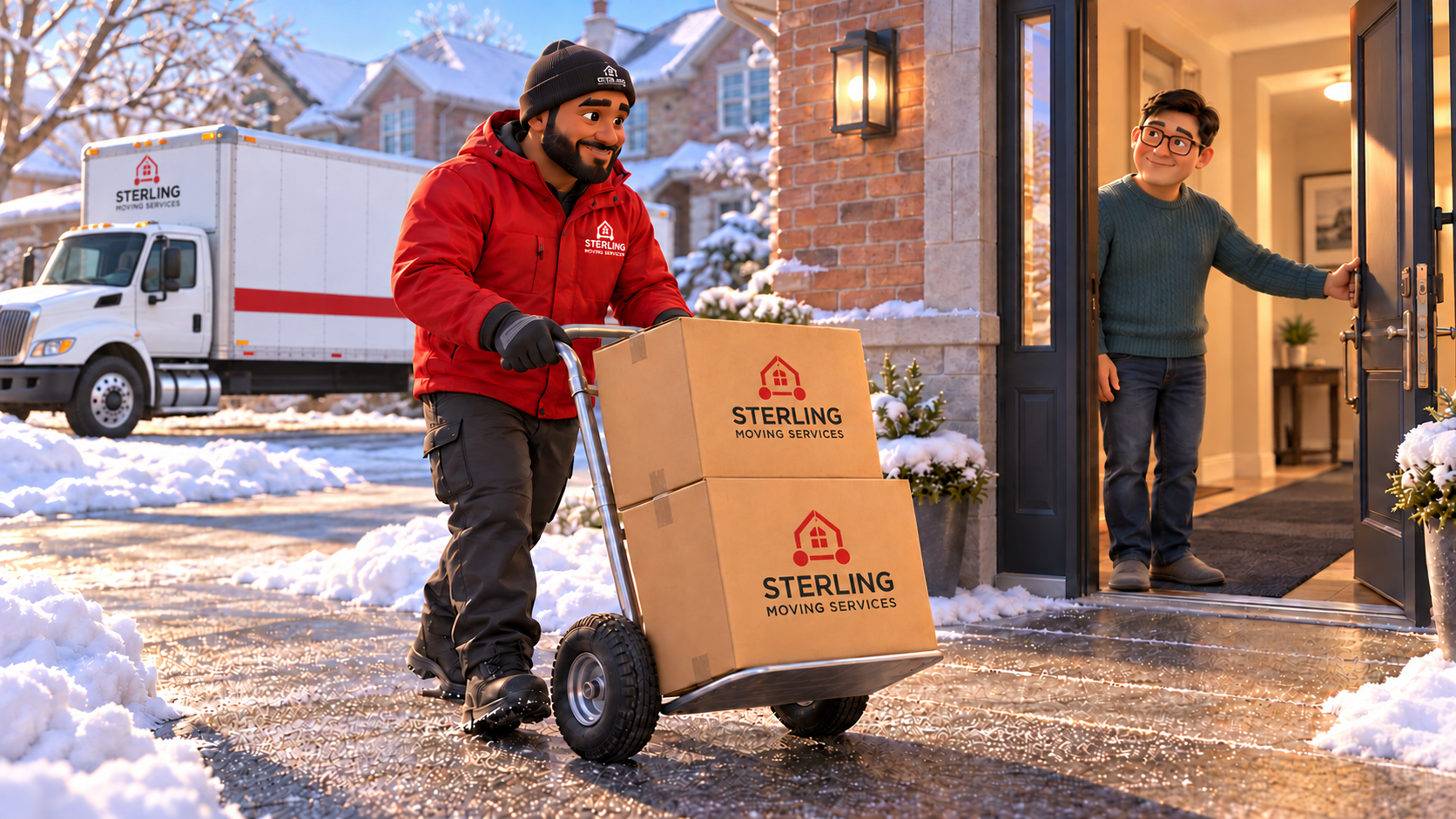
Start Earlier Because the Days Are Short
The sun sets around 5 pm or earlier from November to much of January, and loading in the dark is slower and less safe, especially when there is an icy driveway to contend with. Ask for the earliest start time your mover can offer, and try to finish loading while there is some daylight. You can give yourself extra time with a morning start when unloading takes longer than expected.
Clear the Driveway and Walkways Before the Crew Arrives
The biggest risks in terms of safety for a winter move are snow and ice. Shovel the driveway, walkway and steps before your crew arrives; from there, spread salt or sand where people will be walking.
If you can, do this at each address. When snow falls through the night, clear it in the morning, and help the truck get close to the door by getting parked cars out of the way. Regardless of the weather, having clear paths helps movers safely carry furniture and stick to their schedule.
Protect Your Floors and Your Belongings
Wet boots and melting snow often lead to puddles on flooring, whether it’s hardwood, tile, or carpet. It’s important to prevent this, so place mats at each door and check with the mover to see if they use floor runners or a different kind of floor protection. If you’re providing your own, some good options are old rugs and flattened cardboard. For a quick wipe-up, keep towels close to the entrance.
Take Care With Items That Dislike the Cold
Cold can damage certain belongings, so it’s important to also think about this. Televisions, computers, and any similar electronics need to warm to room temperature before you plug them in. The reason for this is that condensation can form if they go from cold to warm.
Even a short time in freezing air can wreck houseplants, but you can prevent this by wrapping them well and travelling with them in your own warm vehicle.
When it comes to liquids like paint and cleaning products, they can freeze. The answer? To keep them with you or leave them behind. Try to keep your trip from the house to the truck as short as possible.
Plan for Weather Delays on the Road
The 401, 407, and 412 highways can also slow down massively when there’s heavy snow or freezing rain, turning what might be a short drive in summer into something that could look completely different in winter and take far longer than anticipated. A few days before the drive, check the forecast, and do so again the night before you set off.
To ensure transparency, ask your moving company how it handles a major storm day and whether the date can be moved back. It’s good to build some flexibility into your closing or lease dates, as delays are much easier to handle with a spare day.
Condos, Townhouses and Loading Docks
At loading docks, ramps, and entrances, snow and ice often build up. To negate this issue, tell building management your moving day ahead of time, book the elevator, and ask who clears the loading area.
Confirm what your building requires, as wet lobby and elevator floors might need some protective padding.
Local Notes for Whitby and Ajax
Whitby and Ajax both cover a wide array of neighbourhoods, such as Port Whitby, Brooklin and Taunton North in Whitby, and Audley and Nottingham in Ajax.
On a windier day, areas near the waterfront can feel colder due to the wind off Lake Ontario, so make sure to wear several layers and have breaks indoors.
Take the Pressure Off With Packing and Storage
Reduce the amount of time doors stay open in the cold by packing ahead of time. A good approach here is to pack your non-essentials a week early, and keep a box of daily items, like your work laptop, toothpaste, and kettle with you.
For expert support, our packing services can take care of it. If your closing date and move-in date do not line up, storage services can hold your belongings until you are ready for them.
Plan Your Winter Move
A winter move comes down to early starts, clear paths, protected floors and some flexibility. Need home movers Whitby and Ajax residents rely on? Request a quote.
Frequently Asked Questions
Is it harder to move in winter?
Yes, in the sense that it takes more planning, but it’s very manageable with the right approach. Good preparation helps you overcome the hurdles the shorter days and snow throw up.
What happens if there is a snowstorm on moving day?
Contact your moving company as early as possible and ask about rescheduling. Carrying furniture and driving in heavy snow or freezing rain is risky, and safety needs to come first. If your closing or lease date is fixed, tell your mover so you can find the best option together.
Can I move electronics in cold weather?
Yes, but let them warm up to room temperature before plugging them in. This helps avoid damage from condensation. If possible, pack them in their original boxes or properly wrap them.